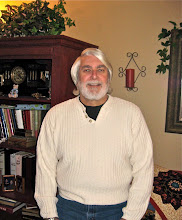
I joined EDS in 1973 when the company was a little over 11 years old. There were 3,000 employees, the company had revenues of $110 Million. I was there and helped the company achieve $250 Million, $500 Million, $1 Billion, $10 Billion, and $20 Billion. I was there when the employee count went to 5,000, then 10,000, then 50,000, then 100,000, and eventually 160,000. I was there when the company first went international. I was there when Ross Perot sold the company to GM (itself now struggling for survival) yet managed to keep EDS as an unconsolidated subsidiary with it's own tracking stock (the first time such a class of stock had ever been offered on the New York Stock Exchange). I was there when Ross left the company assuming the title of "Founder." When he left, he was still earning the same salary as when I joined, $60,000 per year. He always cast his lot with the company's fortune, basing his wealth on his stock in the company. He was bought out for $700 Million.
Subsequent to Perot's departure, the company had a succession of leaders. Les Alberthal initially continued to grow the company and eventually led the company back to an independent corporation. He also made an effort to erase the "cult of personality" that he viewed as Perot's influence. But it soon became obvious that Alberthal (and the rest of the second tier leaders) was no match for Perot's business approach and influence. The company soon stalled in it's growth and Alberthal was replaced after receiving $36 Million for his accomplishment.
Dick Brown, a telephone guy, replaced Alberthal and pretty much the senior leadership in EDS. he also couldn't match Perot. In fact, he couldn't match Alberthal--in a mere two years, Brown and his team brought EDS to the brink of bankruptcy.
Brown was replaced by Michael Jordan, a turn-around specialist who once again brought (and bought) his own cadre of secondary leaders. By basically selling off assets, cutting out (or drastically reducing) investment in future technology, and embarking on a series of labor cuts and early retirements, EDS was "saved" into profitability. Jordan left the company in better financial shape than when he joined, but the company was well on it's way to becoming a tier 2 player.
When Ron Rittenmeyer became chairman, it was only a matter of time before the company was acquired. EDS was fast becoming a niche player, unable to effectively compete against those larger companies that both manufactured hardware and sold services.
The end came rapidly: In August 2008, EDS was acquired by HP, becoming a business unit called "EDS, an HP Company." That was only a transition phase. In October, HP announced a massive reduction in force at EDS of around 26,000 people over three years. However, with the beginning of December, it was obvious that reduction was going to be accelerated. HP did not want to have the lingering problems it experienced after acquiring Compaq Computer (and to a lesser extent, DEC). Added to that was a souring economy and the need for action became more critical. Therefore, in the first week of December, the layoffs accelerated, it was announced that Rittenmeyer would retire at the end of the year, and EDS would be absorbed into HP's Technical Services Group. So long EDS. As W. Edwards Deming once said, "Survival is not mandatory."
From the beginning, I owned EDS stock and continued to own the GME tracking stock even when I left EDS for a few years in the 1990s. And I owned EDS stock when HP cashed it out during the acquisition. I did well (not as well as Rittenmeyer's three-year tenure and buy-out, but I can sleep at night). I hope HP prospers as I continue to own their stock. But I will miss EDS. I was a part of something probably most people never have a chance to experience and those there now will never experience.
I have been retired from EDS for more than a year. It was a great ride and I wouldn't trade it for anything. Alas EDS, I knew it well. It is truly the end of an era.
Showing posts with label W. Edwards Deming. Show all posts
Showing posts with label W. Edwards Deming. Show all posts
Sunday, December 7, 2008

Wednesday, November 19, 2008
Boomer Losers
Yesterday, CEOs of the big three automobile makers in the US made their pitch to Congress for an ADDITIONAL $25 billion bailout for their industry. Having already been authorized a $25 billion line of credit to "innovate" alternative energy cars, they are now asking the American taxpayer for an additional $25 billion that will buy them at most 6 additional months of cashflow. For example, GM stated that they are burning through $5 billion a month. They stand to get around $12 billion of a $25 billion handout. Therefore, a bailout would give GM anlittle less than 3 months additional time. Should Congress grant their wish? Congress is reluctant to do so.
These three CEOs demonstrated the dire straits of their respective organizations by the example of their behavior and that is why this bailout is a bad idea. First, while they will be forgoing their hefty bonuses, their salaries remain astronomical when compared to their well-payed rank-and-file. For example, the CEO of Ford makes some $28 million a year and he has taken that company to the brink of bankruptcy. Second, demonstrating that cost-cutting and sacrifice start at the top, all three CEOs flew to Washington on private corporate jets.
I agree that failure of the big three auto makers will be catastropic to the economy. Yet, it is investors who put a CEO in charge of Chrysler who, in his previous job, almost destroyed Home Depot while walking away with a $210 million golden parachute. It is the people talking to Congress that are the problem. It is the boards of these organizations who appoint and overpay these CEOs that are the problem. It is the investors who do not hold their boards accountable for gross mismanagement that are the problem.
Unfortunately, giving the people who are the problem more money is not the solution. There is a much better chance that real change will occur through a court-supervised bankruptcy than through legislated bailouts.
Investors wanted short-term profits at the cost of long-term survivability. Well, you got it and now you and the employees and suppliers and communities where these companies are located are all going to pay the price. As Dr. W. Edwards Deming once stated, "Survival is not mandatory."
Don't provide the bailout. Put that $25 billion toward paying the pensions of retirees who were guaranteed a pension when they worked at these companies. Congress let the companies underfund the pensions. Now Congress needs to make their mistake right, not dig a deeper hole. The Boomers are screwed either way.
These three CEOs demonstrated the dire straits of their respective organizations by the example of their behavior and that is why this bailout is a bad idea. First, while they will be forgoing their hefty bonuses, their salaries remain astronomical when compared to their well-payed rank-and-file. For example, the CEO of Ford makes some $28 million a year and he has taken that company to the brink of bankruptcy. Second, demonstrating that cost-cutting and sacrifice start at the top, all three CEOs flew to Washington on private corporate jets.
I agree that failure of the big three auto makers will be catastropic to the economy. Yet, it is investors who put a CEO in charge of Chrysler who, in his previous job, almost destroyed Home Depot while walking away with a $210 million golden parachute. It is the people talking to Congress that are the problem. It is the boards of these organizations who appoint and overpay these CEOs that are the problem. It is the investors who do not hold their boards accountable for gross mismanagement that are the problem.
Unfortunately, giving the people who are the problem more money is not the solution. There is a much better chance that real change will occur through a court-supervised bankruptcy than through legislated bailouts.
Investors wanted short-term profits at the cost of long-term survivability. Well, you got it and now you and the employees and suppliers and communities where these companies are located are all going to pay the price. As Dr. W. Edwards Deming once stated, "Survival is not mandatory."
Don't provide the bailout. Put that $25 billion toward paying the pensions of retirees who were guaranteed a pension when they worked at these companies. Congress let the companies underfund the pensions. Now Congress needs to make their mistake right, not dig a deeper hole. The Boomers are screwed either way.
Subscribe to:
Posts (Atom)

 Posts
Posts